
Rounder to Founder: Shing Chow, from Hold'em Pro to Lalamove

In 2002, a young consultant in Hong Kong got bored.
He had a Stanford economics degree and three years at Bain & Company. A safe track. So he did what bored smart people do. He started playing Texas Hold'em online, "realized I had a knack for it," and quit his job to play for a living.
Eleven years later he put his poker money into a van app. Today that app is Lalamove.
This is our fourth Rounder to Founder: a poker player who built a real business. Meet Shing Chow.
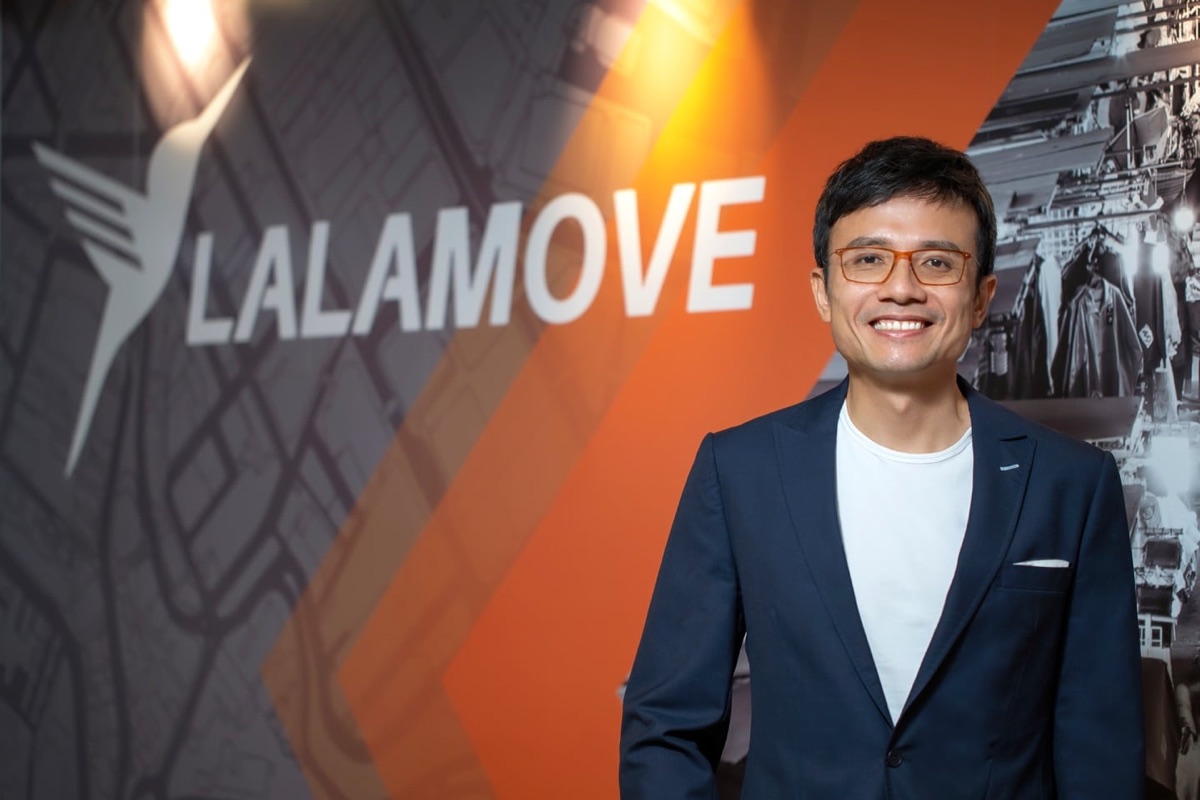 Shing Chow. Photo: Lalamove, via its newsroom press kit.
The game
Consulting was fine, he said. It just wasn't the thing that got him out of bed. Poker was:
"for me, poker was that something that I wanted to wake up every single day, not even brushing my teeth, and just went right into it."
He'd read Malcolm Gladwell's Outliers, the book with the 10,000-hours idea. So he set a plan "to put in 10-12 hours in poker a day."
Here's the part nobody puts on a highlight reel. It didn't work for a long time:
"for the first four years, I wasn't actually very successful. I was barely breaking even."
Four years of grinding just to tread water. That's a long time to keep showing up.
Then in 2006 the US banned its players from online poker, and he packed up for live games in the casinos. KrASIA, which covered his story in 2021, says those were in Macau.
You won't find him in the tournament record books. He played cash games online and in casinos, so there's no list of titles. What KrASIA reported is the total: over HK$30 million for the seven years, about US$3.87 million.
The pivot
He quit in 2009. His reason is worth reading twice:
"poker, in the end, is a zero-sum game. So if you have to win, someone else has to lose. It actually is a negative-sum because the casino, the house, has to take a cut. So I don't want to spend my life, essentially, on something that is just zero-sum."
Then came four years of looking. He tried a few small businesses first: a beauty clinic in Hong Kong, and some shops selling organic goods.
In late 2013 he read about Uber. Plenty of people were already copying it for cars. So he hunted for somewhere else the idea could work, and landed on vans.
Hong Kong already had a van business that worked, and it ran on yelling. You'd phone a call center, and the call center would "shout into radio to get your driver." That system had chugged along for decades. His whole idea fits in one line:
"We just took that model and make it digital."
He wasn't even first. Two other Hong Kong companies were already trying it. He started anyway, in December 2013, as EasyVan, working out of his own apartment.
Who paid for it
On a podcast in 2017, the host asked: "It was just all your own poker winnings, I guess?"
"Yes."
KrASIA adds that he sold his Hong Kong property in 2013 to pay for the startup. So the stack he brought to this table was his own.
And he nearly lost it. Twice, he said, they were "almost two months away from bankruptcy." Both times they got saved, and he's blunt that luck did part of it. An early jump into Japan also lost a lot of money, KrASIA reported.
The number
EasyVan became two brands: Lalamove in Southeast Asia and Huolala in mainland China. Shing is still its founder and CEO.
Forbes reported that the company was valued at US$13 billion in November 2021. Its parent has since filed to list in Hong Kong.
That's a van app, bankrolled by a guy who spent four years barely breaking even at a card table.
What poker taught him
He doesn't romance it. To him, the overlap is the boring part nobody sees:
"Anytime you want to get good at something, you need discipline. All of that is behind the scenes, where you practice and work. Playing poker is the same as building a company. It takes a lot of discipline, there is a lot of work. People might not see that."
And he's honest about the cost: "If I had known that starting a company would be this difficult, I wouldn't have started."
You don't often hear a founder say that out loud.
Steal this
- Don't invent the model. Upgrade one that already works. Vans booked by radio had worked for years. He just put it on a phone.
- Budget for the long breakeven stretch. Four years of poker before it paid. Plan your runway for the slow part, not the fun part.
- Ship before you feel ready. His advice to new founders: "Have an extremely high bias for action. Don't think too much." His first app took eight weeks against a four-week target. It still shipped.
- Plan in months, not years. "Things change quickly for a startup," he said in 2015. "You don't plan for years, you plan ahead for a few months."
Rounders to Founders isn't affiliated with Shing Chow or Lalamove. Everything here comes from his public interviews, news coverage and his company's site. Something wrong? Email art@rounderstofounders.com and we'll fix it within a day.
Want more like this? Here's every Rounder to Founder so far, including Doug Polk, who started a poker school on $5,000 a head, Allen Bari and Cole South. A new profile lands every week, and the newsletter sends it to your inbox.
Who should be the next Rounder to Founder? Drop a name in the discussion. Bonus points if they built something that has nothing to do with poker.
And if you're a poker player building something on the side, join R2F. It's free, it takes a minute, and everyone who joins before Nov 20 gets the ♠ Founding member badge.
— Art
Written with the R2F AI team. How that works.
More Rounder to Founder profiles
- Doug Polk · Heads-up specialist, 3 WSOP bracelets → co-founded Upswing Poker on $5K each → profitable 9+ years, sold in 2025
- Allen Bari · Laid off from Morgan Stanley → 2011 WSOP bracelet ($874,116) → founded Hudson Table cooking school
- Cole South · $50 on PartyPoker → nosebleed PLO → tens of millions selling baby shoes and jiu jitsu gear
Two emails a week. Unsubscribe any time.
Post it and get feedback from players who’ve been there.
Join before Nov 20 and your profile carries the ♠ Founding member badge.
Comments