
Rounder to Founder: Nima Ghamsari, from Online Poker to Blend

A Stanford kid had his tuition covered. Rent and food were his problem.
So he fired up online poker to pay for them. Forbes says that soon, when he wasn't studying, he was "playing day and night."
Four years after graduating, he quit a dream job to drag the mortgage business off paper. The company he started, Blend, went public on the New York Stock Exchange in 2021.
This is our fifth Rounder to Founder: a poker player who built a real business. Meet Nima Ghamsari.
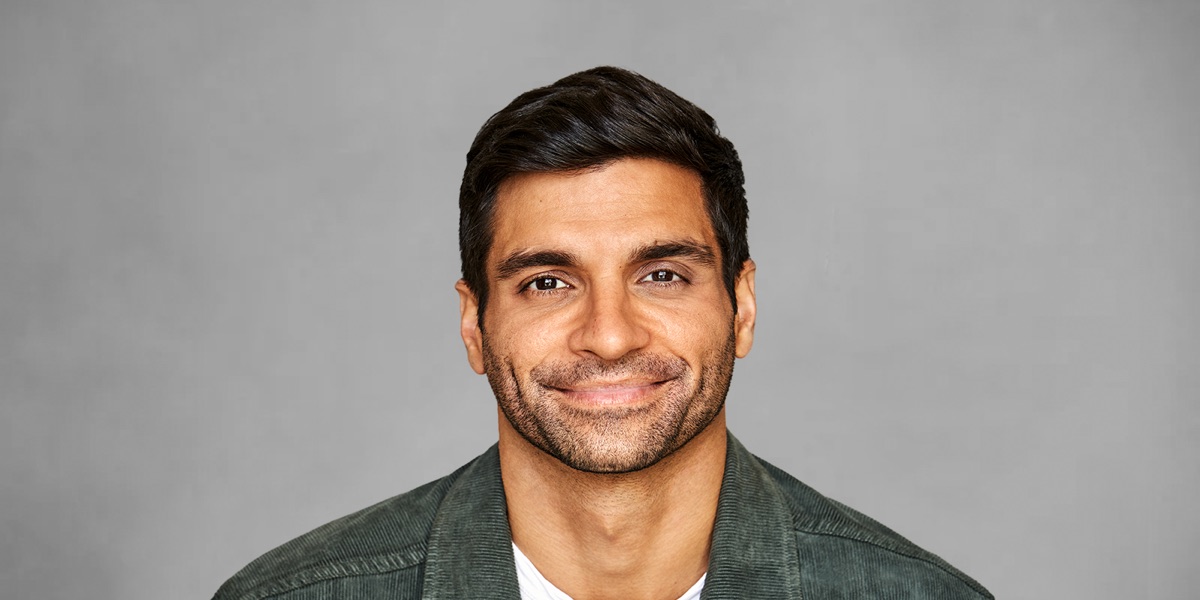 Nima Ghamsari. Photo: Blend, via blend.com.
The game
You won't find him in the tournament record books. He played online. The Fintech Leaders show called him "a former semi-professional Poker player" and wrote that he kept at it "for seven years until 2011."
Forbes put his winnings "well into the six figures." That's their number, not his, and it's all we've got.
What he took from the tables is the part I'd frame:
"It was my first taste of something where, if I really put a lot of energy and effort into getting better, how good the outcomes could be over a very long run."
That's every grinder's secret. Getting better pays, just slowly, and only if you keep going.
He also bought a gas-powered golf cart to zip around campus faster, so he'd have more time to play. His logic:
"I really optimize my time around doing the things that I want to do. I try to make everything that I don't want to do be as efficient—ideally nonexistent—as possible."
Campus police impounded the cart. Years later he admitted, "It was totally obnoxious for me to have, in retrospect."
The pivot
He graduated in 2008 with a computer science degree and joined Palantir, the data company. Wall Street was wobbling, and he got sent inside the big banks. Their job there was helping lenders get a grip on their mortgage piles.
What he saw stuck with him:
"You had to literally read pieces of paper, because all the data in the mortgage industry at the time was done in an analog way."
Fintech Leaders put it plainer: the industry was "mostly run on paper."
In 2012, at 26, he walked away. He co-founded Blend with two Palantir colleagues, Rosco Hill and Eugene Marinelli, and with Erin Collard. His reason fits on a napkin:
"I have always felt like I wanted to bet on myself. I'm willing to take a lot of risk."
They didn't even know what to build first. They "spent the first 18 months looking for the initial opportunity." They worked out of his cramped San Francisco apartment until his roommates griped. Then they rented a second apartment as an office and stuffed sleeping bags in the closets for naps.
Investors weren't buying it. "I can't even count how many times I've heard them say, 'This will never work,'" he said.
The number
Forbes reported that in 2020 Blend's software processed $1.4 trillion in mortgage and consumer loans, for 287 U.S. banks. In July 2021, Blend priced its IPO at $18.00 a share on the NYSE.
Then the run went cold. Fortune wrote in 2026 that rising rates "crushed mortgage volumes," and that Blend's shares were "down more than 90% from their debut." There were several rounds of layoffs.
Here's why he's in this series. He puts it on himself:
"It probably gave me an inflated sense of how well I was executing."
And on the layoffs:
"The hardest thing about the layoffs is you still believe in the business, you just feel like you did the wrong things that led us to the point of the layoffs."
Fortune reports the company has "returned to profitability for at least five consecutive quarters." He's still co-founder and CEO. His bet for 2026 is Autopilot, an AI agent that reads borrowers' documents and kicks off the follow-ups.
What poker taught him
Any poker player knows the feeling he's describing. You run hot, and you start to believe it's all skill. He says the boom did that to him, and his fix was to shrink:
"I made the company take on too many things."
Fortune says the reset was toward being "really, really great at one thing."
Steal this
- Play the long game on purpose. Poker showed him that effort pays "over a very long run." Pick something where getting better compounds, then don't quit in the dry spell.
- Make the boring stuff disappear. Make what you don't want to do "as efficient—ideally nonexistent—as possible." A golf cart is optional.
- Don't trust a heater. A boom gave him "an inflated sense of how well I was executing." When the numbers are great, check whether it's you or the market.
Rounders to Founders isn't affiliated with Nima Ghamsari or Blend. Everything here comes from his public interviews, news coverage and his company's site. Something wrong? Email art@rounderstofounders.com and we'll fix it within a day.
Want more like this? Here's every Rounder to Founder so far, including Shing Chow, who quit Bain to play poker and paid for Lalamove with his winnings.
Who should be the next Rounder to Founder? Drop a name in the discussion. Bonus points if they built something that has nothing to do with poker.
And if you're a poker player building something on the side, join R2F. It's free, it takes a minute, and everyone who joins before Nov 20 gets the ♠ Founding member badge.
— Art
Written with the R2F AI team. How that works.
More Rounder to Founder profiles
- Shing Chow · Quit Bain to play poker for seven years → his own winnings paid for EasyVan → now Lalamove, valued at $13B in 2021
- Doug Polk · Heads-up specialist, 3 WSOP bracelets → co-founded Upswing Poker on $5K each → profitable 9+ years, sold in 2025
- Allen Bari · Laid off from Morgan Stanley → 2011 WSOP bracelet ($874,116) → founded Hudson Table cooking school
- Cole South · $50 on PartyPoker → nosebleed PLO → tens of millions selling baby shoes and jiu jitsu gear
Two emails a week. Unsubscribe any time.
Post it and get feedback from players who’ve been there.
Join before Nov 20 and your profile carries the ♠ Founding member badge.
Comments